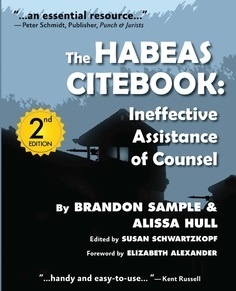





Human Rights Defense Center v. Anderson, SC, Complaint, Censorship, 2026
Download original document:
Document text
Document text
This text is machine-read, and may contain errors. Check the original document to verify accuracy.
UNITED STATES DISTRICT COURT
DISTRICT OF SOUTH CAROLINA
ANDERSON DIVISION
HUMAN RIGHTS DEFENSE CENTER,
a not-for-profit corporation,
Plaintiff,
v.
JOEL ANDERSON, individually and in his
official capacity as Director of the South
Carolina Department of Corrections; CURTIS
EARLEY, individually and in his official
capacity as Warden of the Perry Correctional
Institution, Pelzer, South Carolina,
Defendants.

)
)
)
)
)
)
)
)
)
)
)
)
)
)
)

Civil Action No. __________

COMPLAINT
JURY TRIAL DEMANDED

COMPLAINT
Plaintiff Human Rights Defense Center (“HRDC” or “Plaintiff”), for its Complaint, alleges
on knowledge, information and belief as follows:
INTRODUCTION
1.

This case challenges an unconstitutional censorship policy in South Carolina

prisons. Plaintiff HRDC is a nonprofit publisher that sends books, journals, and educational
materials to incarcerated people across the country. The United States Supreme Court has
recognized that publishers like HRDC have a fundamental right to correspond with incarcerated
individuals. Yet the Defendants have adopted and enforced a policy that blocks HRDC’s
publications from reaching incarcerated persons in South Carolina Department of Corrections
(“SCDOC”) facilities and disposes of those publications without any meaningful opportunity to
challenge the rejection. HRDC therefore brings this action to halt Defendants’ improper censorship
and to secure the due process the Constitution requires.

JURISDICTION AND VENUE
2.

This suit is brought under 42 U.S.C. § 1331 because this action arises under the

Constitution and laws of the United States, and under 42 U.S.C. § 1333, because it seeks redress
for violations of civil rights under 42 U.S.C. § 1983.
3.

Venue is proper under 28 U.S.C. § 1391(b) because at least one Defendant resides

within this judicial district, and Defendants’ challenged conduct took place entirely within South
Carolina.
4.

Plaintiff’s claims for relief are brought pursuant to 42 U.S.C. § 1983, which permits

actions to address deprivation of rights, privileges, and immunities protected by the First and
Fourteenth Amendments to the Constitution and laws of the United States, when those rights,
privileges, and immunities are deprived under color of state law.
5.

This Court has jurisdiction over claims seeking damages and declaratory and

injunctive relief under 28 U.S.C. §§ 1343, 2201, and 2202.
6.

HRDC is seeking attorneys’ fees and costs pursuant to 42 U.S.C. § 1988, which

authorizes the Court to award such attorneys’ fees and costs to the plaintiff when the plaintiff
prevails in an action brought under 42 U.S.C. § 1983.
PARTIES
7.

HRDC is a 501(c)(3) non-profit entity organized under the laws of Washington,

with its principal place of business in Lake Worth, Florida. HRDC advocates on behalf of people
held in U.S. correctional and detention facilities, including South Carolina state prisons. HRDC
publishes and distributes books and two monthly journals: Prison Legal News: Dedicated to
Protecting Human Rights and Criminal Legal News: Dedicated to Protecting Human Rights.

-2-

8.

Defendant Joel Anderson is the Director of SCDOC. Pursuant to South Carolina

Code of Laws Title 24, Chapter 1, the director of SCDOC is appointed by the Governor of South
Carolina and has authority to “make and promulgate rules and regulations necessary for the proper
performance of the department’s functions,” and to “prescribe reasonable rules and regulations
governing the humane treatment, training, and discipline of prisoners,” among other duties.
Defendant Anderson served as interim director of SCDOC from April 2025 to March 2026, and
was confirmed director on March 3, 2026.
9.

Defendant Curtis Earley serves as Warden of the Perry Correctional Institution,

located at 430 Oaklawn Road, Pelzer, South Carolina in the Anderson Division of the District of
South Carolina.
FACTUAL ALLEGATIONS
A.

HRDC’s Mission and Outreach to Detention Facilities

10.

For over thirty-six years, HRDC has focused its mission on education, advocacy,

and outreach to prisoners and the public about the economic and social costs of prisons to society,
the constitutional and human rights afforded to prisoners, and the ways in which prisoners can
access education while incarcerated. HRDC’s mission, if realized, helps prisoners educate
themselves and has a salutary effect on public safety.
11.

To accomplish its mission, HRDC publishes and distributes books, magazines, and

other materials containing news and analysis about prisons, jails, and other detention facilities,
prisoners’ rights, court rulings, management of prison facilities, prison conditions, and other
matters pertaining to the rights and interests of incarcerated individuals.
12.

HRDC has thousands of subscribers to its monthly magazines in the United States

and abroad, including prisoners, attorneys, judges, journalists, libraries, and members of the public.

-3-

Since its creation in 1990, HRDC has sent its publications to prisoners and law librarians in more
than 3,000 correctional facilities across the United States, including death row units and
institutions within the Federal Bureau of Prisons, such as the federal Administrative Maximum
Facility (“ADX” or “Supermax”) in Florence, Colorado—the most secure prison in the United
States.
13.

HRDC publishes and distributes an award-winning monthly magazine titled Prison

Legal News: Dedicated to Protecting Human Rights (“Prison Legal News”), which contains news
and analysis about correctional facilities, the rights of prisoners, court opinions, prison and jail
conditions, excessive force, and religious freedom. Prison Legal News is published on newsprint
bound by two small staples, and each edition is 72 pages long.
14.

HRDC also publishes and distributes a second monthly magazine titled Criminal

Legal News: Dedicated to Protecting Human Rights (“Criminal Legal News”), which contains
news and analysis about individual rights, court rulings, and other criminal legal-related issues.
Criminal Legal News is also published on newsprint bound by two small staples, and was 48 pages
long per edition, but has more recently expanded to 56 pages long.
15.

HRDC also publishes and/or distributes several different soft-cover books on

criminal justice, health, and legal issues that are of interest to prisoners and others. Specifically,
HRDC publishes and distributes Prisoners’ Guerilla Handbook: A Guide to Correspondence
Programs in the United States and Canada (“Prisoners’ Handbook”), which provides information
on enrolling at accredited higher educational, vocational, and training schools. HRDC publishes
and distributes the Prison Education Guide, which provides a comprehensive listing of
correspondence programs available to prisoners, including a detailed analysis of the quality and
cost of each program.

-4-

16.

In addition to its publications, HRDC also communicates with prisoners through

the United States Postal Service by sending and receiving letters with pertinent information about
HRDC’s publications and related topics and sending subscription renewal letters. HRDC also
sends informational brochures, which provide pertinent information about HRDC’s publications.
17.

HRDC has been attempting to send these important publications to prisoners

incarcerated at SCDOC facilities. Yet, Defendants maintain mail policies or practices that
unconstitutionally prevent HRDC from doing so.
B.

Defendants’ Unconstitutional Approved Vendor Book Policy

18.

Effective August 13, 2025, SCDOC instituted a policy (PS-10.08 § 9), limiting

inmates to receiving single copies of books from one of six approved vendors:
Inmates may receive single copies of books, if paid for in advance by the inmate,
a family member, or friend, that are sent directly to the inmate from one of the
approved vendors listed below:
Hamilton Books
Books N Things Warehouse
Books to Inmates.com
SureShot Books Publishing, LLC
Barnes & Noble (online only)
Books-A-Million (online only)
Books must be sent directly to the inmate from the above listed vendors only.
Books sent to inmates from other sources or other vendors will be rejected and
sent to Contraband for disposal. Books from Barnes & Noble and Books-AMillion shall only be purchased online and sent directly to the inmate. Books
from Barnes & Noble and Books-A-Million that are purchased in-store, even if
they are sent directly to the inmate, will be rejected and will be sent to
Contraband for disposal.
19.

This policy is referred to herein as the “Approved Vendor Policy” and is found

attached to this Complaint as Exhibit A. This policy is available on SCDOC’s website. See S.C.
Dep’t of Corr., PS-10.08, “Inmate Correspondence Privileges” (Aug. 13, 2025),
https://doc.sc.gov/sites/doc/files/Documents/policy/PS-10-08.pdf; see also Family: Sending

-5-

Books to an Inmate, S.C. Dep’t of Corr., https://www.doc.sc.gov/family (last visited July 8, 2026).
This policy is unconstitutional on its face and as applied.
20.

By prohibiting the mailing of books not from approved vendors, and thereby

banning prisons from receiving books from HRDC, SCDOC’s Approved Vendor Policy and
practice violates HRDC’s Free Speech rights under the First Amendment.
21.

By rejecting and disposing of books without notice to the sender and an opportunity

for appeal, SCDOC’s Approved Vendor Policy and practice violates HRDC’s rights to due process
protected by the Fourteenth Amendment.
C.

Defendants’ Unconstitutional Censorship of Plaintiff’s Books

22.

Between December 2025 and June 2026, HRDC sent letters, books, magazines, and

information brochures to individuals confined at the Perry Correctional Institution, as well as other
SCDOC-managed correctional facilities.
23.

Between January 2026 and June 2026, fourteen (14) of those items were returned

to HRDC by SCDOC facilities. The items returned were addressed to individuals confirmed to
still be in SCDOC custody on the day that HRDC received the returned mail.
24.

The fourteen (14) returned items received by HRDC consisted of: two (2) copies of

the Prison Education Guide and twelve (12) copies of another publication.
25.

In addition to the items returned to HRDC by SCDOC facilities, HRDC has

received dozens of letters from prisoners in custody at SCDOC facilities indicating that they did
not receive the books HRDC mailed to them.
26.

Enclosed with five (5) of the prisoner letters received by HRDC were rejection

notices provided by SCDOC to the prisoners, who were the intended recipients of the books. Three
(3) of these rejection notices were from Perry Correctional Institution.

-6-

27.

For example, on March 3, 2026, HRDC mailed a book to Richard Starrett, SCDOC

#157938, at the Perry Correctional Institution. On March 11, 2026, Mr. Starrett received a notice
of rejection, dated March 9, 2026, from the Perry Correctional Institution mailroom, indicating
that the book mailed by HRDC was unauthorized per Policy PS-10.08 and that the book had been
“turned over for disposal.” A copy of this notice is attached to this complaint as Exhibit B.
28.

On information and belief, SCDOC has also failed to deliver at least fifty-eight (58)

other books mailed by HRDC to individuals in custody at SCDOC facilities without returning the
books to HRDC or providing HRDC with any notice that the books were rejected.
29.

Defendants failed to provide HRDC with any notice of these censorship decisions

or any opportunity to appeal these censorship decisions. Therefore, Defendants’ policies and
practices also violate HRDC’s Fourteenth Amendment rights to due process.
30.

Because of the Defendants’ actions, HRDC has suffered and will continue to suffer

damages, including, but not limited to: suppression of HRDC’s speech, curtailment of HRDC’s
message, impairment of HRDC’s organizational mission, and loss of current or inability to obtain
potential customers and subscribers.
31.

Defendants are responsible for overseeing and applying these unconstitutional

policies and practices. Defendants are also responsible for training and supervising staff personnel
whose actions have injured and continue to injure HRDC.
32.

Defendants’ actions and omissions have been and remain motivated by

impermissible motivations, and were and remain committed under color of law with deliberate
indifference to HRDC’s rights.
33.

Plaintiff HRDC intends to continue to correspond and send books to persons

incarcerated in SCDOC facilities, including the Perry Correctional Institution.

-7-

34.

The Defendants’ unconstitutional policies and practices continue to violate

HRDC’s rights. Those policies and practices have caused and are causing the injuries HRDC has
suffered, and HRDC’s injuries are the direct result of the Defendants’ unconstitutional acts.
Therefore, HRDC has no adequate remedy at law.
35.

On January 23, 2026 (before several of the incidents identified above), HRDC’s

Executive Director, Paul Wright, sent a letter to Defendant Anderson by United States Postal
Service Certified Mail detailing how SCDOC was enforcing its policy against HRDC, describing
the substantial legal precedent establishing a publisher’s right to communicate with prisoners and
its entitlement to due process, and demanding that SCDOC rescind its unconstitutional policy.
36.

Neither Defendant Anderson nor SCDOC responded to Mr. Wright’s letter, and

SCDOC has continued to enforce its unconstitutional policy and to deny HRDC of its rights to due
process.
37.

Without relief from this Court, HRDC will suffer irreparable injury from the denial

of its free speech and due process rights. HRDC is therefore entitled to declaratory and injunctive
relief.

CLAIMS
COUNT I – 42 U.S.C. § 1983
Violation of the First Amendment
38.

HRDC repeats and re-alleges each and every allegation set forth above and

incorporates them herein by reference.

-8-

39.

Defendants’ acts described above violate HRDC’s right to correspond with persons

incarcerated in SCDOC facilities, as protected by the First Amendment and applied to SCDOC
through the Fourteenth Amendment.
40.

HRDC has a protected interest in corresponding with SCDOC prisoners, and that

right is clearly established by existing case law.
41.

Defendants’ conduct was objectively unreasonable, arbitrary, and undertaken

recklessly, intentionally, willfully, with malice, and with deliberate indifference to the rights of
others.
42.

HRDC’s injuries and the violations of its constitutional rights were directly and

proximately caused by the Defendants’ policies and practices.
43.

Defendants’ acts described above have harmed HRDC, and if not enjoined, will

continue to harm HRDC.
44.

HRDC seeks declaratory and injunctive relief, nominal and compensatory damages

against all Defendants, and punitive damages against the Defendants in their personal capacities.
COUNT II – 42 U.S.C. § 1983
Violation of the Fourteenth Amendment
45.

HRDC repeats and re-alleges each and every allegation set forth above and

incorporates them herein by reference.
46.

Defendants’ acts described above violate HRDC’s right under the Due Process

Clause of the Fourteenth Amendment to receive notice of an opportunity to appeal Defendants’
acts of censorship. HRDC has a right to receive adequate notice and an opportunity to be heard
when Defendants’ acts censor HRDC’s written speech, but Defendants’ policies and practices fail
to provide such notice and opportunity to be heard.

-9-

47.

Defendants’ conduct was objectively unreasonable, arbitrary, and undertaken

recklessly, intentionally, willfully, with malice, and with deliberate indifference to the rights of
others.
48.

HRDC’s injuries and the violations of its constitutional rights were directly and

proximately caused by the Defendants’ policies and practices of Defendants.
49.

Defendants’ acts described above have harmed HRDC, and if not enjoined, will

continue to harm HRDC.
50.

HRDC seeks declaratory and injunctive relief, nominal and compensatory damages

against all Defendants, and punitive damages against the Defendants in their personal capacities.
REQUEST FOR RELIEF
WHEREFORE, Plaintiff respectfully requests the following relief:
a)

A declaration that Defendants’ policies and practices violate the First and
Fourteenth Amendments to the Constitution;

b)

A preliminary and permanent injunction preventing Defendants (and their
successors in office) and their employees, agents, and any and all people acting in
concert with them, from further violation of HRDC’s rights under the First and
Fourteenth Amendment; and providing other equitable relief;

c)

Nominal damages for each violation of HRDC’s rights by the Defendants;

d)

Compensatory damages in an amount to be proven at trial;

e)

Punitive damages against the individual Defendants in an amount to proven at trial;

f)

Costs, including reasonable attorneys’ fees, under 42 U.S.C. § 1988 and under other
applicable law; and

g)

Any other relief that this Court deems just and equitable.

-10-

JURY DEMAND
Plaintiff HRDC, by and through its attorneys, demands a trial by jury pursuant to Federal
Rule of Civil Procedure 38(b) on all issues so triable.

Dated: July 13, 2026
Respectfully submitted,
/s/ Joel S. Hughes
Joel S. Hughes
HUGHES LAW GROUP
1614 Taylor Street, Suite B
Columbia, SC 29201
Telephone: (803) 704-1004
Federal Bar ID No.: 9796
South Carolina Bar No.: 73708
joel@hugheslawsc.com
Jonathan Picard (pro hac vice to be submitted)
HUMAN RIGHTS DEFENSE CENTER
P.O. Box 1151
Lake Worth, FL 33460
Telephone: (561) 360-2523
Facsimile: (561) 828-8166
Florida Bar No.: 105477
jpicard@humanrightsdefensecenter.org
Of Counsel:
Ari S. Meltzer (pro hac vice to be submitted)
Kevin G. Rupy (pro hac vice to be submitted)
Joshua K. Waldman (pro hac vice to be submitted)
Grace Moore (pro hac vice to be submitted)
WILEY REIN LLP
2050 M Street NW
Washington, DC 20036
Telephone: (202) 719-7000
Facsimile: (202) 719-7049
ameltzer@wiley.law
krupy@wiley.law

-11-

jwaldman@wiley.law
gomoore@wiley.law
Attorneys for Plaintiff Human Rights Defense
Center

-12-

EXHIBIT A

SCDC POLICY

Change 1 to PS-10.08: 5.1; 6.6; 6.7; 8.1; Definitions/Publication
Change 2 to PS-10.08: 9.1
Change 3 to PS-10.08: 9.1
NUMBER: PS-10.08
TITLE: INMATE CORRESPONDENCE PRIVILEGES
ISSUE DATE: SEPTEMBER 6, 2022
RESPONSIBLE AUTHORITY: OFFICE OF GENERAL COUNSEL
POLICY MANUAL: PROGRAMS AND SERVICES
SUPERSEDES: PS-10.08 (January 5, 2017); (May 1, 2013); (May 1, 2008); (January 1, 2005)
RELEVANT SCDC FORMS/SUPPLIES: 10-6, 10-7, 10-11, 10-12, 10-13, 10-14, 15-15, 19-11, 19-45,
ACA/CAC STANDARDS: 4-ACRS-6A-01, 4-ACRS-6A-02, 4-ACRS-6A-06, 4-ACRS-6A-07, 4-ACRS-6A-08, 4ACRS-7F-03, 4-4266, 4-4274, 4-4275, 4-4279, 4-4280, 4-4285, 4-4487, 4-4492, through 4-4496
STATE/FEDERAL STATUTES: MONTCALM PUB. CORP. v. BECK, 80 F.3d 105 (4th Cir. 1996).
THE LANGUAGE USED IN THIS POLICY DOES NOT CREATE AN EMPLOYMENT CONTRACT
BETWEEN THE EMPLOYEE AND THE AGENCY. THIS POLICY DOES NOT CREATE ANY
CONTRACTUAL RIGHTS OR ENTITLEMENTS. THE AGENCY RESERVES THE RIGHT TO REVISE
THE CONTENTS OF THIS POLICY, IN WHOLE OR IN PART. NO PROMISES OR ASSURANCES,
WHETHER WRITTEN OR ORAL, WHICH ARE CONTRARY TO OR INCONSISTENT WITH THE
TERMS OF THIS PARAGRAPH CREATE ANY CONTRACT OF EMPLOYMENT.
PURPOSE: To provide guidelines for incoming and outgoing inmate correspondence.
POLICY STATEMENT: The South Carolina Department of Corrections (SCDC) recognizes the importance of
an inmate's desire to correspond with family members, attorneys, and others. To this end, SCDC will not place
a limit on the quantity of mail an inmate may send (provided the cost is borne by the inmate) or receive, or the
length, language, content, or source of mail, except where there is reasonable belief that the limitation is
necessary to protect public safety, institutional order, or security. Inmate correspondence privileges will be
administered in accordance with all applicable Agency policies, American Correctional Association Standards,
and state and federal statutes.
TABLE OF CONTENTS
1.
2.
3.
4.
5.
6.
7.

RESPONSIBLE AUTHORITY
INSTITUTIONAL MAILROOMS
OPERATIONAL HOURS
MAILING SUPPLIES
INCOMING MAIL/CORRESPONDENCE
UNAUTHORIZED CORRESPONDENCE
INSPECTING/READING/SCANNING INCOMING/OUTGOING CORRESPONDENCE

8. DELIVERY OF INCOMING MAIL
9. PUBLICATIONS
10. FORWARDING PACKAGES/MAIL
11. MAIL LIMITS
12. INMATE CHECK
13. OUTGOING PACKAGES
14. RETURN ADDRESS/TIME LIMITS OF OUTGOING MAIL
15. SPECIAL POSTAL SERVICES
16. RESTRICTED MAIL
17. DISCLAIMER/DATE STAMP ON OUTGOING MAIL
18. INMATES CORRESPONDING WITH ONE ANOTHER INSIDE AND OUTSIDE SOUTH CAROLIN
19. CORRESPONDENCE REVIEW COMMITTEE
20. WEB SITE PEN PAL SOLICITATIONS
21. SCDC MEDICAL RECORDS (HEALTH INFORMATION RESOURCES)
22. STAFF PACKAGES
23. DEFINITIONS
SPECIFIC PROCEDURES:
1. RESPONSIBLE AUTHORITY:
1.1 The Agency's Mailroom Coordinator, assigned to the Office of General Counsel, will be responsible for
monitoring the operations of all SCDC mailrooms and for ensuring adherence to the inmate correspondence
procedures.
1.2 The Agency's Mailroom Coordinator, the Institutional Mailroom Coordinator, and appropriate Warden(s) will be
responsible for ensuring that the information regarding inmate correspondence that is provided to newly admitted
inmates upon their arrival at the Reception and Evaluation Centers is in accordance with SCDC Policy PS-10.08,
"Inmate Correspondence Privileges." (4-4285)
2. INSTITUTIONAL MAILROOMS: Each institution will maintain a mailroom or designated area for sending,
receiving, and distributing inmate mail. The Postal Director/Mailroom Supervisor, and/or one (1) or more employees
designated by the Warden (for those institutions that do not have postal positions), will oversee the processing of all
incoming and outgoing inmate mail. (4-ACRS-6A-07, 4-4487)
2.1 Employees who are responsible for the inmate mail will ensure that all mail is inspected, stored, processed,
delivered, and handled in a secure manner to prevent theft, tampering, delay, or other interference. Postage stamps,
address labels, and other stickers may be removed from an inmate's incoming mail. Staff must use discretion as to
the method of removal (peeling, cutting, etc.). Caution should be taken to prevent destruction of inmates' mail
beyond what is necessary to remove the stamp or other sticker.
2.2 Inmates and unauthorized employees will be prohibited from entering institutional mailrooms/areas. (A memo
from the Warden listing authorized employees must be posted in the mailroom at all times). However, inmate workers
under constant supervision may be allowed in the mailroom to perform custodial duties or to assist in lifting heavy
items. No inmate worker will be assigned to work/stay in the mailroom.
2.3 Each Warden/designee will ensure that a sufficient number of locked mailboxes are placed throughout the
institution and living units/areas accessible to general population inmates. The Postal Director/designee will be
responsible for collecting mail from these boxes at least once daily (excluding weekends, holidays, and emergencies).
2.4 Each Warden/designee will ensure that a minimum of one (1) locked mailbox is placed in the Reception and
Evaluation Unit (R&E), the Restrictive Housing Unit (RHU), Substantiated Security Risk (SSR), Death Row,
Safekeeper, and Young Offender Units. The Postal Director/designee will be responsible for collecting mail from
these boxes at least once daily (excluding weekends, holidays, and emergencies).
2.5 The institutional mailroom staff must submit a monthly financial report to the Agency's Mailroom Coordinator by
the 5th of each month.

3. OPERATIONAL HOURS: All SCDC mailrooms will be operational Monday through Friday for a total of 37.50
to 40 hours (excluding weekends, holidays, and emergencies). Access to the mailroom for the general population will
be in accordance with the institutional controlled movement schedule, with the exception of legal mail. Inmates will
be allowed daily access to the mailroom for the purpose of sending and receiving legal correspondence during the
operational hours of the mailroom. Inmates housed in areas such as R&E, any RHU, SSR, Death Row, Safekeeper,
and YOPRS Units will be notified by the Warden/designee in writing of the scheduled times when mail will be picked
up and delivered to these areas by the Postal Director/designee.
3.1 Each institution must post operational hours for general population inmates in areas visible to them, such as at the
mailroom window, in the dorms/living units, and on the mailbox.
3.2 When the institution/dorm is on lockdown, the Postal Director or designee must report to each dorm/living unit to
issue and/or collect legal mail only.
4. MAILING SUPPLIES:
4.1 Non-indigent Inmates:
4.1.1 Inmates with funds in his/her E.H. Cooper account, regardless of custody status, will be required to
purchase mailing supplies (e.g., embossed postage envelopes, packing materials, writing materials, etc.)
through their institutional canteen. If additional postage is needed, it can be obtained through the Postal
Director/designee.
4.1.2 Exceptions to section 4.1.1 are inmates housed in RHU and SSR, who will only be issued the indigent
hygiene packet, and will not be provided with any additional general mailing supplies. Embossed postage
envelopes cannot be altered.
4.1.3 Should a non-indigent inmate deplete his/her account or not have sufficient funds to cover the expense of
his/her general correspondence, the inmate will not be able to receive additional supplies until s/he either (1)
receives sufficient funds, or (2) is declared indigent, at which time the procedures applicable to indigent
inmates will apply.
4.2 Indigent Inmates:
4.2.1 All indigent inmates, regardless of custody status, will be provided with one (1) pencil (which will be
exchanged for a new pencil when it wears out), eight (8) sheets of paper, and two (2) date-stamped envelopes
(which expire thirty [30] days from the date of issuance) on a monthly basis to be used for sending mail not
weighing more than one (1) ounce per envelope. Indigent inmates will be allowed to exchange their current
date-stamped envelope for postage to be placed on another envelope (i.e., a greeting card envelope provided by
the Chaplain). The inmate's account will not be debited for these supplies.
4.2.2 The materials will be a part of a hygiene pack that will be issued to authorized indigent inmates on a
monthly basis. An indigent inmate's account will not be debited for the postage affixed to the date-stamped
envelope.
4.2.3 Inmates will be permitted to use these materials for general, legal, or privileged correspondence; however,
the limit given for general correspondence will not be increased. No hand-made envelopes and no envelopes
that have been altered from its original state will be allowed to be used to send mail outside of the institution.
(4-ACRS-6A-06, 4-4489)
4.2.4 Additional first class postage will be given to inmates who lack sufficient funds to send mail to a court, an
attorney, or a party to a lawsuit upon proof of pending or formally initiating litigation. The cost of the postage
will be charged to the inmate as restitution through the use of SCDC Form 10-14, "Agreement to Debit E.H.
Cooper." Postage shall be given to inmates on indigent status pursuant to this paragraph only after the inmate
has used all postage available pursuant to Section 4.2.1.
4.2.5 An indigent inmate who has exhausted his/her indigence allowance and needs additional postage to send
legal mail will have to prove the postage is for pending or formally initiating litigation. Proof will consist of

showing the documents to the reviewing staff member who will be looking for court docket numbers, Captions,
and other evidence or indications that the inmate is involved in pending litigation or is formally initiating
litigation. In such cases, staff shall read only those sections of the mail necessary to make this determination;
the mail shall not be read in its entirety and shall be read/scanned in the inmate's presence. Employees will be
provided training on this determination by the Office of General Counsel. If requested information is not
provided or an inmate refuses to show mail to staff reviewing mail, the letter(s) will not be processed. This also
applies to non-indigent inmates who have no funds available in their account.
4.3 Writing Tools (Materials):
4.3.1 Inmates will be permitted to use only writing tools (materials) issued by the Commissary, sold in the
Canteen or provided to the inmates in the pre-approved Christmas packages. Inmates assigned to the approved
Hobbycraft Program will be allowed to use their writing tools (materials) for the Hobbycraft Program only, and
cannot utilize them for writing general correspondence.
4.3.2 The receipt of correspondence or mailing supplies by any other means will be considered a violation of
Agency rules and regulations, and inmates may be charged in accordance with SCDC Policy OP-22.14,
"Inmate Disciplinary System." Exceptions to this are listed in Section 6.1.5.
5. INCOMING MAIL/CORRESPONDENCE:
5.1 Delivery: All incoming mail will be delivered to the mailroom or designated area for processing. SCDC's goal is
to distribute letters to inmates within 48 hours of receipt, and packages within seven (7) days of receipt (excluding
weekends, holidays, and emergencies) provided they are not rejected or withheld for investigation/review. Note: On
April 10, 2023 a pilot program for photocopying incoming inmate general mail began at Camille Griffin Graham
Correctional Institution and Leath Correctional Institution. For more details see the March 24, 2023 memo from
the Office of General Counsel. (Changes in BLUE, amended by Change 1, dated April 3, 2023, signed by the
Director on April 7, 2023, but does not go into effect until April 10, 2023.)
5.2 Address Requirements: If mail is received in the mailroom that is not clearly addressed the Postal
Director/designee will make every effort to determine the correct address for delivery to the inmate. When mail is
received continuously incorrectly addressed, the inmate will be advised to notify the sender of his/her correct address.
After sixty (60) days, the incorrectly addressed mail will be stamped "Return to Sender, Undeliverable," and returned
to the U.S. Post Office.
5.2.1 All incoming mail must have the name of the sender, as well as a complete return address in the upper
left hand corner of the envelope/package. If no return address is provided, the mail will be returned to the U.S.
Post Office;
5.2.2 All incoming mail to an inmate must be clearly marked with the inmate's committed name, SCDC
number, full name of the correctional institution, unit name/number, dorm/living unit, street or post office
box/drawer, city, state and zip code;
5.2.2.1 If incoming legal/privileged mail is not clearly marked as listed in section 5.2.2, every effort to
properly identify the correct inmate will be made. If the correct inmate cannot be identified, "Unable to
Identify Inmate" will be written in the "Comment" section of the Legal/Privileged/Certified Mail
Delivery Log.
5.2.3 Any mail received in the mailroom (incoming/outgoing) with excessive unnecessary markings and/or
symbols on the envelope/package will be stamped "Return to Sender," and returned.
5.2.4 No SCDC Form 10-4, "Notice of Rejected Incoming/Outgoing Correspondence," is required for items
listed in sections 5.2.1 - 5.2.3.
5.3 Special Delivery Mail: Employees will be permitted to sign for certified mail and commercial delivery mail
(UPS, Fed-Ex, etc.) that is addressed to an inmate. Employees must check to ensure that the inmate is still assigned to
the institution prior to accepting the delivery.

5.3.1 If the employee, other than mailroom personnel, does not have access to the automated Offender
Management System, s/he must contact the mailroom immediately prior to accepting the delivery to advise the
Postal Director/designee of the delivery.
5.3.2 No collect on delivery (C.O.D.) mail will be accepted. All C.O.D. mail addressed to inmates which is
received by mailroom employees will be stamped "Return to Sender" and will be returned to the U.S. Post
Office.
5.4 Mail Returned by the U.S. Post Office: Mail returned to SCDC by the U.S. Post Office will be treated the same
as all other incoming mail.
5.5 Authorized Correspondence: Inmates will be permitted to receive the following through the mail:
5.5.1 Photocopies of books/newspaper/magazine clippings/crossword puzzle pages/photocopies of books, or
information printed from the Internet (except for information referred to in section 6.1.1) - up to five (5)
pages/clippings per envelope, provided that the contents do not depict questionable material. If an excessive
number of copies are received, the entire correspondence will be handled per section 6.1.10. However, if the
inmate can demonstrate that the excessive material is supportive documentation as it relates to accessing the
courts, an inmate may have it for the purpose of his/her legal defense/claim, provided that the contents do not
depict questionable material. See section 6.1.9 regarding unauthorized items for inmates in RHU/SSR.
5.5.2 Audio CDs of his/her own parole hearing through the mail provided that they are sent directly from the
Department of Probation, Parole, and Pardon Services. These audio CDs will be considered legal material and
will be governed in accordance with SCDC Policy OP-22.03, "Authorized Inmate Property and Disposition of
Unauthorized Property."
5.5.2.1 If an inmate needs to listen to his/her parole hearing CD to prepare an appeal of the parole
board's decision, the inmate will be provided one (1) opportunity to hear the CD.
5.5.3 A video, DVD, or an audio CD of his/her court hearing through the mail provided that it is sent directly
from the court or the attorney of record for the inmate's review, if approved in advance by the Office of General
Counsel. These items will be considered legal material and will be governed in accordance with SCDC Policy
OP-22.03, "Authorized Inmate Property and Disposition of Unauthorized Property." Inmates will not have
access to a computer to print or view any legal material from a compact disk.
5.5.4 Religious audio-cassette tapes or compact discs will be forwarded to the institutional Chaplain for review
and/or approval. A video or a DVD of an immediate family member's funeral may be sent to the Institutional
Chaplain for the inmate to view. Arrangements to view the video/DVD will be made through the Chaplain's
office. The inmate will not be able to retain the video/DVD after he/she has viewed it. It will be mailed out at
the inmate's expense or disposed of as outlined in SCDC Policy OP-22.03, "Authorized Inmate Property and
Disposition of Unauthorized Property."
5.5.5 Inmates will be permitted to receive one (1) opened calendar or poster (8 ½"x 10" or smaller), provided
that the calendar/poster does not have any plastic or metal holders and the contents do not depict any
questionable material. If an unauthorized calendar is received, the entire correspondence will be handled per
section 6.2. Inmates will not be allowed to have daily planners.
5.5.6 Authorized photographs or scanned photographs (8"x10" in size or smaller) and photo books will be
allowed, provided that none of them are sexually oriented, as outlined in section 6.1.6. If multiple photos are
received on an 8"x10" sheet of paper, that will count as one (1) photo. Polaroid pictures will be allowed
provided the entire backing is removed. All photographs will be subject to the limitations in SCDC Policies
OP-22.03, "Authorized Inmate Property and Disposition of Unauthorized Property," and OP-22.16, "Death
Row." See section 6.1.10 regarding unauthorized items for inmates in RHU/SSR and Intake Status.
5.5.6.1 Photo books will be allowed provided they are 10"x10" in size or smaller. The photo book will
count towards the inmate's photo album count.
5.5.6.2 Photo books must come directly from the publisher i.e., Shutter Fly, My Publisher or Wal-Mart.

5.5.7 Government checks and other approved checks (insurance claim settlement, legal settlement, vendor
refunds for purchases paid by Cooper Trust check, etc., will be accepted for deposit to the inmate's E.H. Cooper
Trust Account. (Refer to SCDC Policy ADM-15.12, "E.H. Cooper Trust Fund," for additional information).
5.5.8 Hobbycraft supplies from a recognized commercial vendor will be authorized pursuant to SCDC Policy
PS-10.06, "Inmate Hobbycraft Program." When a package with hobbycraft supplies is received in the
mailroom, the Postal Director/designee will forward the package to the Property Control Officer who will
advise the Hobbycraft Coordinator. The Hobbycraft Coordinator and the Property Control Officer will open and
inspect the package. The package will be taken to the Hobbycraft Room by the Hobbycraft Coordinator. The
Hobbycraft Coordinator will notify the inmate that their hobbycraft package has arrived. (4-ACRS-6A-08, 44493)
5.5.9 Job specific clothing (e.g., clothing and shoes necessary to be worn for purposes of their job) for
inmates participating in a Community Work Program: These packages will be forwarded to the Property
Control Officer for processing in accordance with SCDC Policy OP-22.03, "Authorized Inmate Property and
Disposition of Unauthorized Property." Should an inmate receive any item(s) that causes him/her to exceed any
authorized limits of the same, the inmate will be given the option to mail the excess item(s) home at his/her
expense, donate them to charity, or dispose of such items.
6. UNAUTHORIZED CORRESPONDENCE:
6.1 It is the inmate's responsibility to inform his/her correspondents of all Agency policies/procedures regarding
unauthorized property. Inmates will be prohibited from receiving the following through the mail:
6.1.1 Any printed information from the South Carolina Department of Corrections' or any other
correctional/penal institutional internet website, to include pictures, regardless of the subject matter.
6.1.2 Cash. The entire contents of the correspondence will be returned to the sender within five (5) working
days, provided there is no attempt to conceal the cash. Mailroom employees will make a copy of the currency
(copies of currency must be less than 3/4 or greater than 1-1/2 times the actual size). The copy of the currency,
along with a copy of SCDC Form 10-7, "Notice of Rejected Incoming/Outgoing Correspondence," and SCDC
Form 10-14, Agreement to Debit E.H. Cooper Account," will be maintained in the institution. If there is an
attempt to conceal the cash within the correspondence, the entire piece of mail will be submitted to the
Contraband Control Officer for disposition pursuant to SCDC Policy OP-22.35, "Contraband Control." SCDC
Form 10-7 will be completed documenting that the cash has been submitted to the Contraband Control Office
and SCDC Form 10-7 will be signed and distributed.
6.1.3 Personal or blank checks, checkbooks, pre-paid phone cards, postage stamps, green dot cards or green
dot numbers, other negotiable instruments or any publications that have not been paid for in advance, i.e., an
invoice/receipt for payment is attached.
6.1.4 Any money orders sent directly to the inmate. Money orders will only be accepted from an inmate if the
inmate has the money order with him/her upon his/her immediate arrival to the R&E Center. After the inmate
has endorsed it, the inmate will be provided a copy of the SCDC Form 15-15, "E. H. Cooper Trust Fund,"
receipt. The inmate will receive the remaining correspondence. Money orders sent to inmates in general
population, RHU, SSR, Death Row, Safekeeper, YOPRS and R&E inmates must be returned to the sender even
if the inmate does not have sufficient funds. These money orders must not be disposed of in any other manner.)
Please refer to SCDC Policy ADM-15.12, "E.H. Cooper Trust Fund," Section 3., "Money Order Deposits:" for
further information.
6.1.5 Embossed, or "no postage necessary" envelopes unless they are from the following:

• SCDC;
• Self-addressed envelopes from the inmate's Attorney of Record or any attorney for whom the
inmate can demonstrate that an attorney/client relationship exists;
• Self addressed envelopes from a state or federal court;

• Recognized religious organizations (see SCDC Policy PS-10.05, "Inmate Religion," for

information regarding recognized religions); or
• Self-addressed publication subscription renewal, regardless of the inmate's security level.
6.1.6 Nude or sexually explicit/suggestive photographs (original prints or copies), to include photos in a
publication. Nude, as used in this paragraph, means any depiction in a state of undress to expose the female
breast and/or pubic area, the male genital area, and/or any female or male buttocks, as well as any depiction of
a child's genitals. This includes the exposure in sheer or see-through covering. (If the photograph is at all
questionable, the correspondence will be forwarded to the Correspondence Review Committee, per Section 19
below, for review.)
6.1.7 Tattoo magazines, and/or any items deemed to be tattoo paraphernalia. (See SCDC Policy OP-22.35,
"Contraband Control.")
6.1.8 Any musical/audible greeting cards, any greeting card larger than 8" x 10" in size, blank greeting cards, or
correspondence with arts and craft material/glitter, blank envelopes, pre-printed address labels (for use by the
inmate), blank paper, carbon paper except in authorized forms -- if the carbon paper from the form is removed
and used for something else, it is considered contraband), and any other writing materials, to include stickers,
unless exceptions are approved by the Agency Director and are posted during specified holidays.
6.1.9 Inmates in RHU and SSR will not be allowed to receive newspaper/magazine clippings/crossword puzzle
pages/photocopies of books, or information printed from the Internet mailed in while they are housed in
RHU/SSR, per SCDC Policy OP-22.38, "Restrictive Housing Unit."
6.1.10 Inmates in an Intake Status or RHU/SSR may not receive any publications or photos, to include
newspapers and magazines while they are housed in an Intake Status or RHU/SSR per SCDC Policy OP-22.38,
"Restrictive Housing Unit." Publications received for inmates housed in Intake Status or RHU/SSR will be
automatically returned to sender at the inmate's expense. If funds are not immediately available, the
correspondence will be sent to Contraband for disposal.
6.1.11 Disapproved or unauthorized publications.
6.2 The entire contents of any correspondence containing unauthorized items referenced in sections 6.1.1, 6.1.3,
6.1.5 through 6.1.9 and 6.1.11 above, will be held for ten (10) working days upon receipt of SCDC Form 10-7,
"Notice of Rejected Incoming/Outgoing Correspondence," awaiting a written response (via the inmate Automated
Request to Staff System for those inmates housed in general population, or a paper request utilizing SCDC Form 1911, "Request to Staff Member," for those inmates in restrictive housing areas) from the inmate indicating whether
he/she wants to send the unauthorized correspondence to Contraband. If the inmate does not respond within ten (10)
working days, the entire correspondence will be returned to sender if funds are available. The inmate's E.H. Cooper
account will be debited for the cost of returning the item(s) using SCDC Form 10-14, "Agreement to Debit E.H.
Cooper Account" (which does not require the inmate's signature). If sufficient funds are not available, the entire
correspondence will be processed pursuant to SCDC Policies, OP-22.03, "Authorized Inmate Property and
Disposition of Unauthorized Property," and OP-22.35, "Contraband Control." After the mailroom has received the
written permission from the inmate, the inmate will be allowed to receive the remaining authorized correspondence,
and the unauthorized correspondence will be disposed of pursuant to SCDC Policies OP-22.03, "Authorized Inmate
Property and Disposition of Unauthorized Property," and OP-22.35, "Contraband Control." (4-ACRS-6A-08, 4-4491,
4-4493)
6.3 Unauthorized items referenced in sections 6.3.1 through 6.3.5 below will be considered contraband, and the
entire contents processed pursuant to SCDC Policy OP-22.03, "Authorized Inmate Property and Disposition of
Unauthorized Property." SCDC Form 10-7, "Notice of Rejected Incoming/Outgoing Correspondence," will be sent to
the inmate advising him/her of the receipt and disposition of the unauthorized items:
6.3.1 Anything to eat, drink, or smoke, any appliances, and any hygiene items.
6.3.2 "Bill me later," free gift transactions, or any solicitation materials. The solicitation issue does not pertain
to incoming catalogs, that do not have questionable contents and are appropriately addressed to the inmate.

"Bill me later," free gift transactions, or any solicitation materials may not be sent or received.
6.3.3 Any correspondence/envelopes with perfume/cologne/body spray/oils, lipstick, or body secretions.
6.3.4 Any correspondence that is laminated/covered in plastic, or contains any magnets.
6.3.5 Disapproved/unauthorized inmate to inmate correspondence.
6.4 Inmates will be prohibited from maintaining possession of any financial statements that show a balance of funds
and/or provide information on financial assets that may be available to the inmate (bank deposit books; checking,
savings, or other fund statements, credit reports, except for E. H. Cooper statements, and year-end statements for the
purpose of filing tax returns, etc.). When statements, other than year-end, are received in the mailroom, general
population inmates will be sent SCDC Form 19-45, "Order to Report," to review the statement at the mailroom
window. The Postal Director/designee will be responsible for delivery to inmates in R&E, RHU, SSR, Death Row,
Safekeeper, and YOPRS and for allowing each inmate to review his/her statement in the presence of the mailroom
employee/designee. After review, the statement may be forwarded at the inmate's expense to an address provided by
the inmate or processed pursuant to SCDC Policy OP-22.03, "Authorized Inmate Property and Disposition of
Unauthorized Property."
6.4.1 Inmates will not be allowed to maintain possession of any Internal Revenue Service Forms (e.g., 1040,
1040EZ, blank W-2 forms, etc.) and instructions, State income tax forms and instructions, and completed W-2
forms from employers. Correspondence which contains such items will be held at the mailroom and the inmate
will be sent an SCDC Form 19-45, "Order to Report." The inmate may take any of the following actions in
order to fulfill his/her responsibility to file an income tax return: **Temporary Exception to Policy for this
section in that from October 16, 2020 through October 30, 2020, inmates will be provided the necessary
information and forms to file for CARES Act stimulus checks. ***On October 19, 2020, the Internal Revenue
Service (IRS) extended the deadline for paper filings by inmates. The new deadline is November 4, 2020.
**Temporary Exception to Policy for this section, dated June 15, 2021 will allow any inmate whose check
from the IRS were lost, may possess the required IRS forms to include IRS forms 3911 and 1040. **Temporary
Exception to Policy for this section, dated August 19, 2021, will remain in place until it is expressly revoked
via a subsequent memorandum.
6.4.1.1 The inmate may mail the W-2 (at his/her expense) to a family member or friend on his/her
visiting list;
6.4.1.2 The inmate may request assistance in preparing his/her tax return by sending an SCDC Form 1911, "Request to Staff Member," to the mailroom if they are housed in a restrictive housing area or via the
Automated Request to Staff System if they are housed in general population. The Warden/designee will
coordinate with the Office of General Counsel and the local Volunteer Income Tax Assistance office to
assist inmates with the preparation of the income tax return;
6.4.1.3 The income tax assistance volunteers prepare the tax forms electronically;
6.4.1.4 If a completed income tax return is received in the mail, the inmate may review the return, sign it,
and send it back to the sender. The inmate will not be allowed to take the return from the mailroom; or
6.4.1.5 If a W-2 or 1099 is received in the mailroom and the inmate who it is addressed to makes no
request for disposition, the W-2 will be forwarded to classification utilizing SCDC Form 10-7, placed in
the inmate's institutional record and given to the inmate upon release. The Classification Case
Manager/designee will sign the canary [mailroom] copy of the SCDC Form 10-7 showing receipt of the
documents in this section and section 6.5.
6.5 Inmates will be prohibited from receiving any type of personal identification/documents (or copies thereof) such
as driver's license, identification cards, birth/marriage certificates, Military Discharge Form DD214, diplomas and/or
other similar documents. If these documents are received in the mail, the mailroom employee will forward them for
inclusion in the inmate's institutional record. Inmates will be permitted to receive the remainder of the correspondence
with a completed SCDC Form 10-7, identifying the document(s) removed and noting that it has been forwarded for

inclusion in his/her institutional record. If any of these documents are received through legal mail, the sensitive
information will be redacted, separated, and treated as crime scene photos.
6.6 Inmates are prohibited from receiving hardback books. (Changes in BLUE, here and below, amended by
Change 1 dated April 3, 2023, and signed by the Director on April 7, 2023.)
6.6 6.7
The Correspondence Review Committee may deem other items that are not listed in this section
unauthorized. However, those items are listed in sections 19.1 through 19.1.12 and are reviewed on a case by case
basis.
7. INSPECTING/READING/SCANNING INCOMING/OUTGOING CORRESPONDENCE:
7.1 All outgoing general correspondence must be sent to the mailroom unsealed. Any general mail received in a
sealed condition shall be returned to the inmate. Outgoing legal/privileged mail may be sent to the mailroom sealed.
All incoming general and certified correspondence (provided it is not legal/privileged) will be opened and inspected
by mailroom employees for unauthorized property items/contraband prior to delivery to the inmate. The employee
will ensure that the inmate addressee is at the receiving institution prior to opening the mail. Mailroom staff must
ensure that all metal fasteners (e.g., paper clips, staples, etc.) are removed from all incoming mail addressed to
inmates housed in any RHU, SSR, Death Row or Safekeeper status. Opened mail is to be resealed with tape.
7.2 All incoming legal and privileged mail will be opened and inspected in the presence of the inmate by mailroom
staff or their designee. Legal or privileged mail may be scanned/read when approved in advance, in writing by the
Warden or higher Operational Authority, the Deputy Director of the Office of Investigations and Intelligence (OII), or
the General Counsel, based upon previous abuse of mail privileges or other good cause. The mail will be
read/scanned in the presence of the inmate. See section 19.1.10 regarding questionable legal/privileged mail.
7.3 Any non-legal or non-privileged mail, to include mail written in a foreign language may be read/scanned when the
Warden/designee or higher Operational Authority or the Deputy Director of OII has reason to believe that the
correspondence may contain material that interferes with legitimate penological objectives, i.e., the safety, security, or
order of the institution. (4-ACRS-6A-08, 4-4491, 4-4492, 4-4493, 4-4494)
7.4 Subject to the requirements of Sections 7.2 and 7.3 above, the following personnel may be authorized to
read/scan inmate mail:

• The Warden or higher Operational Authority,
• Associate Warden,
• Major,
• Institutional Intelligence Officer;
• OII Agents;
• Foreign Language Advisor
• Correspondence Review Committee,
• General Counsel or designee,
• Deputy Director of OII or designee; and

• Agency Mailroom Coordinator.

7.5 Envelopes or external packaging may contain only the information allowed by Section 5.2.
7.6 All incoming and outgoing mail/packages in the following categories will be forwarded to the Institutional
Intelligence Officer or OII for reading/scanning:
7.6.1 All mail/packages containing any gang related markings or other unknown or unnecessary symbols. (See
Sections 5.2.3 and 14.1 for more information).
7.6.2 All non-legal, non-privileged mail/packages going to or from an inmate belonging to a Security Threat
Group.
7.6.3 Photographs that have missing parts or have been altered with an ink pen/pencil or white-out.

7.6.4 If further review or action is necessary, the correspondence will be sent to the Correspondence Review
Committee. (See SCDC Policy OP-21.01, "Security Threat Group," for more information.)
7.6.5 If any correspondence listed in sections 7.6.1 through 7.6.4 are deemed unauthorized, the correspondence
will be handled according to section 6.3 above.
7.7 Incoming packages will be forwarded to the Property Control Officer who will document receipt of all packages
using SCDC Form 10-11, "Incoming Package Delivery Log." The Log will be maintained by the mailroom staff on a
monthly basis to ensure that it is properly completed. The package(s) will be forwarded to the Property Control
Officer who will document the contents on SCDC Form 19-2, "Inmate Property Inventory."
7.8 If an inmate's incoming/outgoing correspondence is rejected for delivery or sending out, the Postal
Director/designee will advise the inmate within 72 hours, excluding weekends, holidays, and emergencies using
SCDC Form 10-7, "Notice of Rejected Incoming/Outgoing Correspondence," indicating the reason for rejecting the
mail. A copy of the form will be available to the Warden/designee.
8. DELIVERY OF INCOMING MAIL:
8.1 The Postal Director/designee will, on a daily basis, (excluding weekends, holidays, and emergencies) deliver
incoming general mail to each living unit/area. An officer/employee assigned to the unit will then be responsible for
distributing the mail to the inmates daily, either through "mail call" by dorm/unit or by designating a location within
the unit/area for the inmates to pick up their mail. If mail is not distributed to the specific inmate by the end of the
night, the mail is to be returned to the mailroom the next morning. Mail will not be left unattended under any
circumstances. (4-4266) Note: On April 10, 2023 a pilot program for photocopying incoming inmate general mail
began at Camille Griffin Graham Correctional Institution and Leath Correctional Institution. For more details see
the March 24, 2023 memo from the Office of General Counsel. (Changes in BLUE, amended by Change 1, dated
April 3, 2023, signed by the Director on April 7, 2023, but does not go into effect until April 10, 2023.)
8.2 Pre-Release and Work Centers: All correspondence for these inmates will or may be received in the
administrative area. Inmates will, on a daily basis (excluding weekends, holidays and emergencies), be permitted to
pick up their mail as they return to the Center from work.
8.3 Legal, Privileged, and Certified Mail: The Postal Director/designee will be responsible for date-stamping and
documenting all incoming legal, privileged, and certified correspondence on SCDC Form 10-12,
"Legal/Privileged/Certified Mail Delivery Log." The disposition of such mail (e.g., inmate picked up mail, inmate
refused mail - returned to sender, inmate released from the SCDC-mail forwarded, etc.) must be documented on the
Legal/Privileged/Certified Mail Delivery Log. The Postal Director will be responsible for verifying the identity of the
inmate by his/her SCDC identification card prior to delivering the mail. Legal, privileged, and certified mail will be
distributed to inmates as follows: (4-ACRS-6A-02, 4-ACRS-6A-01,4-4275, 4-4276, 4-4280)
8.3.1 General population inmates will be notified on SCDC Form 19-45, "Order to Report," when any legal,
privileged, or certified mail has been received. SCDC Form 19-45, "Order to Report," will be delivered to the
inmate at the same time the general mail is delivered to the unit, but no later than 48 hours after receipt of the
mail at the institution (excluding weekends, holidays and emergencies). The Postal Director/designee will keep
one [1] copy of the "Order to Report" with the incoming legal, privileged, or certified mail until the inmate
comes to the mailroom to pick up his/her mail.) If the mail is unclaimed after five (5) working days and if the
inmate is still at the institution, a second "Order to Report" will be sent to the inmate. If still unclaimed after
five (5) working days of the second "Order to Report" the mail will be marked "Unclaimed Return to Sender"
and it will be mailed to the Post Office. The inmate will be required to sign SCDC Form 10-12,
"Legal/Privileged/Certified Mail Delivery Log," acknowledging the mail was inspected in his/her presence
before he/she received it. If the inmate fails to report to the mailroom and the mail is unclaimed, the log will be
documented in the inmate signature block as "Unclaimed, Return to Sender" and it will be returned to the Post
Office. The log will be signed by the Postal Director/designee.
8.3.2 RHU, SSR, R&E, Death Row, Safekeeper, and YOPRS inmates' legal, privileged, or certified mail will
be delivered by the Postal Director/designee and the inmate will be required to sign SCDC Form 10-12,
"Legal/Privileged/Certified Mail Delivery Log," acknowledging the mail was inspected in his/her presence

before he/she received it. Should a staff member encounter any behavioral problems with an inmate assigned to
RHU/SSR refer to SCDC Policy OP-22.38, "Restrictive Housing Unit," for additional information.
8.3.3 Pre-Release and Work Center inmates' legal, privileged, or certified mail will be delivered at the same
time as their general mail. The officer on duty will be responsible for ensuring the inmate will sign SCDC Form
10-12, "Legal/Privileged/Certified Mail," acknowledging the mail was inspected in his/her presence before
he/she received it.
8.3.4 If an inmate refuses to acknowledge receipt/delivery of legal, privileged, or certified mail, the refusal will
be documented on SCDC Form 10-12, "Legal/Privileged/Certified Mail Delivery Log." The log will be signed
and witnessed by two (2) employees. The correspondence will be stamped "Return to Sender, Refused" and will
then be returned to the U.S. Post Office.
8.3.5 If an inmate is on Crisis Intervention, the mailroom staff will check with medical/mental health staff on a
daily basis to assess whether the inmate can receive his/her legal mail. If the inmate is going to be on Crisis
Intervention more than ten (10) working days, excluding weekends and holidays. The Agency Mailroom
Coordinator must be contacted for further instructions.
9. PUBLICATIONS:
9.1 Inmates may receive single copies of publicationsbooks, if paid for in advance by the inmate, a family member,
or friend, that are sent directly to the inmate from one of the approved vendors listed below:
Hamilton Books
Books N Things Warehouse
EBooks2Inmates Books to Inmates.com (Changes in PURPLE amended by Change 3, dated October 16, 2025)
SureShot Books Publishing, LLC
Barnes & Noble (online only)
Books-A-Million (online only)
from a publisher or publications supplier, to include bookstores, if paid for in advance by the inmate, a family
member, or friend. PublicationsBooks must be sent directly to the inmate from a publisher or publications supplier (to
include bookstores) the above listed approved vendors only. Books sent to inmates from other sources or other
vendors will be rejected and sent to Contraband for disposal. Books from Barnes & Noble and Books-A-Million
shall only be purchased online and sent directly to the inmate. Books from Barnes & Noble and Books-A-Million
that are purchased in-store, even if they are sent directly to the inmate, will be rejected and will be sent to
Contraband for disposal. A legitimate invoice or receipt on business stationary/letterhead must be enclosed with the
publication(s) received from one of the approved vendors. If the invoice/receipt is not enclosed, the inmate will have
fifteen (15) working days from the date SCDC received the publication to have his/her family member or friend email or fax the invoice/receipt to the Agency Mailroom Coordinator/designee. If the invoice/receipt is not received,
the publication will be automatically returned to sender if funds are available. If funds are not available If an invoice
is not received within fifteen (15) working days, the publication will be sent directly to Contraband for
disposal. Magazines or other subscription publications are not required to come from one of the approved vendors
listed above, but they are required to be paid for in advance, addressed to the inmate, and shall only come directly
from a verified online subscription source. See section 6.1.10 in regards to unauthorized publications for inmates in
Intake Status or RHU/SSR. (Changes in GREEN amended by Change 2, dated August 13, 2025)
9.2 All shipments must be clearly addressed with the inmate's committed name, SCDC number, dorm/living unit, full
name of institution, street or post office box/drawer, state, and zip code. If a shipment is received at the institution
without a complete address, the inmate will be advised to notify the sender of his/her correct address. If the address is
not corrected within sixty (60) days, the shipment will be stamped, "Return to Sender, Undeliverable," and returned.
The Mailroom will maintain a record of the inmate being notified. These procedures will also apply when an inmate
is moved from one unit to another.
9.3 An inmate will only be allowed to have in his/her possession the amount of publications authorized by SCDC
Policy OP-22.03, "Authorized Inmate Property and Unauthorized Property Disposition." Authorized amounts may
differ for inmates housed in Reception and Evaluation, any Restrictive Housing Unit/SSR, Death Row, Safekeeper

Unit, or Youthful Offender Intensification Program. Refer to Agency policies specific to these Units for more
information. (4-4490)
9.4 All publications will be read/scanned by mailroom staff or Property Control Officer prior to being delivered to
any inmate. Publications that are questionable in nature according to sections 19.1.1 through 19.1.8 will be referred to
the Correspondence Review Committee. Disapproved publications will be handled as noted in sections 6.1.1. through
6.1.6. Publications that are clearly unauthorized according to section 6.1.1 through 6.1.7 will be handled according to
section 6.2. (4-ACRS-6A-08, 4-4491)
9.5 Correspondence Review Committee (CRC) Responsibilities:
9.5.1 The CRC support staff will notify the inmate that the publication has been disapproved.
9.5.2 The CRC support staff will notify the publisher of the CRC decision to disapprove the publication for the
inmate's possession.
9.5.3 Notification to the publisher is not required when:
9.5.3.1 The publisher is located in a foreign country, and does not have offices in the United States.
9.5.3.2 If the publication was not disapproved.
9.6 Appeals of Publication Disapprovals: When a publication is disapproved by the CRC, the publisher may appeal
the CRC decision to the Deputy Director of Operations within fifteen (15) calendar days of receipt of the written
notification that the publication has been disapproved. The office of the Deputy Director of Operations will provide
written notification to the publisher of the final decision within ten (10) days of that decision.
10. FORWARDING PACKAGES/MAIL:
forwarded as follows:

Packages, general, legal, privileged, and certified mail will be

10.1 Permanent Transfers: When any package, general, legal, privileged, and/or certified mail is received at an
institution and the inmate to whom it is addressed has permanently transferred to another SCDC institution, the
package/mail will be forwarded to the inmate's current location through the SCDC interdepartmental mail system. If
inadvertently opened, the envelope will be taped closed and forwarded to the appropriate institution through the
interdepartmental mail system. Legal/privileged/certified mail must be date stamped and documented on SCDC Form
10-12, "Legal/Privileged/Certified Mail Delivery Log," and then forwarded to the inmate's current location through
the SCDC interdepartmental mail system. Also, the comment section should indicate where the
Legal/privileged/certified mail was forwarded to. See section 5.2 regarding sixty (60) day time requirement.
10.2 "Temporary" Inmate Movement (court appearance, medical appointment, etc.): Legal, privileged, or
certified mail/package received for the inmate will be held up to seventy-two (72) hours at the inmate's permanently
assigned institution when an inmate is temporarily transferred. After seventy-two (72) hours, call the Agency
Mailroom Coordinator for instructions. Any package or general mail received for the inmate will be held up to seven
(7) days in the mailroom at the inmate's permanently assigned institution when an inmate is temporarily transferred.
If it is determined that the inmate will not return to the institution the inmate's package/mail will:
10.2.1 If inmate is within the SCDC, be forwarded to the inmate's current location using the interdepartmental
mail system; or
10.2.2 If inmate is outside the SCDC's jurisdiction, the inmate's package, general, legal, certified mail, and
privileged mail will be stamped "Undeliverable," and returned to the U.S. Post Office unopened. If the letter
was opened and inspected, the mail will be placed in a new envelope, with new postage affixed to it prior to
returning if to the U.S. Post Office.
10.3 Inmates Released from the SCDC: Inmates will be responsible for informing their correspondents of a
change of mailing address. An inmate who is being released from SCDC custody should provide, on his/her own
initiative, a forwarding address using SCDC Form 10-13, "Change of Address Request." This form will be made
available in all institutional mailrooms. If a forwarding address was given, Mailroom staff will stamp first and second

class mail "Forward To" and send to the forwarding address provided by the inmate for thirty (30) days. (Mailroom
staff should scratch through the old bar-code.) All other classes, and mail with no forwarding address provided, will
be stamped "Return to Sender, Unable to Forward" and returned to the U.S. Post Office. After the thirty (30) day time
period, the mail will be stamped "Return to Sender, Forwarding Time Expired" and returned to the U.S. Post Office. If
the mail is certified mail or a first class letter that was opened and inspected, it will be placed in a new envelope with
the proper postage affixed, and forwarded to the new address, or returned to the U. S. Post Office with a note
indicating that the inmate is no longer at SCDC. (4-ACRS-6A-09, 4-4496)
10.4 Deceased Inmates: All general, legal, privileged, and certified correspondence received for an inmate who is
deceased will be stamped "Return to Sender, Undeliverable" and returned unopened to the U.S. Post Office. If the
mail was opened and inspected, the mailroom will place it in a new envelope and affix it with new postage prior to
returning it to the U.S. Post Office.
10.5 Escaped Inmates: All general mail received for an inmate who has escaped will be opened and read/scanned
by the Warden, Associate Warden, or Major. If the correspondence contains any references to the escape, it will be
immediately forwarded to the Division Director of OII or his/her designee. If the correspondence does not contain
any references to the escape, it will be placed in a new envelope affixed with the proper postage, and forwarded back
to the sender. All legal and privileged mail received for an inmate who has escaped will be stamped "Return to
Sender, Undeliverable" and returned unopened to the U.S. Post Office. Certified mail, provided it is not legal or
privileged, will be treated as general correspondence and will be read/scanned for information concerning the escape.
11. MAIL LIMITS: There will be no limit on the quantity of mail an inmate may send (provided the cost is borne by
the inmate) or receive or the length, language, content, or source of mail except where there is reasonable belief that
the limitation is necessary to protect public safety, institutional order, or security. Inmates in RHU/SSR will only be
issued the indigent hygiene packet and will not be provided any additional general mailing supplies. (4-4488)
11.1 Legal: Inmates will be permitted to send legal mail as needed regardless of his/her indigent status, E.H. Cooper
Trust Fund account cash balance, or canteen spending limit to the following recipients:

• Officials of federal, state, and local courts - the inmate shall be required to demonstrate that s/he has an action

pending in the court or that s/he is initiating an action in the court. For indigent inmates, all pending/initiated
legal actions in court must relate to challenging or appealing the inmate's sentence or to challenging the
conditions of his/her confinement.

• Attorneys (and their authorized representatives) - limited to inmate's attorney of record; attorney(s) representing

the defendant in civil actions in which the inmate is a plaintiff. (An attorney/client relationship must be
established by correspondence from the attorney confirming representation in a particular matter or court
documents proving appointment in an on-going, not past case.) See the Definition section for more information;

• Judges of federal, state, and local courts,
• South Carolina Attorney General; or
• The SCDC Office of General Counsel, which can be sent through inter-departmental mail.
11.1.1 The inmate's Cooper Trust Fund will be debited to cover the cost of all legal correspondence, to include
envelopes, postage, writing instruments, and any other necessary supplies. Inmates without canteen privileges
and inmates housed in any RHU/SSR, or Safekeeper Unit will have their accounts debited for these supplies
using SCDC Form 10-14, "Agreement to Debit E.H. Cooper Account." The Chief, Commissary
Branch/designee, will provide a price list for envelopes, writing instruments, paper, and any other necessary
mailing supplies to the Agency's Mailroom Coordinator, who will ensure that the list is provided to all
institutional mailrooms. The list will be updated when prices change. The institutional mailroom staff will use
this list to calculate restitution amount
11.2 Privileged: An inmate will be authorized to send unlimited amounts of privileged correspondence provided
s/he has the funds to pay for the same. An indigent inmate will be permitted to use the general mail supplies provided
to him/her as indicated in Section 4.2.1, above, for the purposes of mailing privileged correspondence. General
population inmates may use the Automated Request to Staff System, or inmates housed in restrictive housing areas

may utilize SCDC Form 19-11, "Request to Staff Member," to send correspondence to the mailroom staff at his/her
current institution. The correspondence will be forwarded to the appropriate area(s) if needed. (4-4280)
11.2.1 Inmates incarcerated in an SCDC facility may report any act of sexual abuse by calling *22, and/or by
written or verbal reports to any Agency staff member, contract employee, volunteer, or the Division of OII or
SLED (address). The inmate can file a written report without giving his/her name or the name of the
abuser(s). This information could also include an assault that occurred at any correctional facility, detention
center, county facility or while under community supervision, prior to or during his/her commitment to SCDC
(4-4281-7).
11.3 Certified: An inmate will be permitted to send certified mail provided s/he has the funds in his/her account to
pay for the same. Pursuant to South Carolina Court Rules, indigent inmates and inmates without funds in their
account will only be authorized to send certified mail for summons or complaints going directly to the S. C. Attorney
General's Office. If there is a problem with the delivery of certified mail, the inmate will submit a SCDC Form 19-11,
Request to Staff Member," if housed in a restrictive area or via kiosk for inmates in general population, to the
mailroom asking for assistance. The SCDC Form 19-11 must contain all pertinent information. (4-ACRS-6A-02, 44274)
12. INMATE CHECK:
12.1 An inmate wishing to send money through the mail must have a check written on his/her E.H. Cooper Trust
Fund account. (See SCDC Policy ADM-15.12, "E.H. Cooper Trust Fund.")
12.2 The Division Director, Director of Finance, or designee will mail the check to the payee.
12.3 The Postal Director/Mailroom Supervisor or designee will be responsible for providing inmates housed in any
RHU/SSR, Death Row, and Safekeeper Unit access to the E. H. Cooper Trust Fund in accordance with specific
procedures related to the same.
13. OUTGOING PACKAGES: An inmate will be prohibited from sending packages unless it contains one of the
following:
13.1 Finished hobbycraft items, or hobbycraft supplies, and materials as stipulated under SCDC Policy PS-10.06,
"Inmate Hobbycraft Program."
13.2 Excess authorized property items pursuant to the requirements of SCDC Policy OP-22.03, "Authorized Inmate
Property and Disposition of Unauthorized Property."
13.3 Personal electronic appliances (e.g., Walkman, typewriters, etc.) authorized for possession under SCDC Policy
OP-22.03, "Authorized Inmate Property and Disposition of Unauthorized Property," requiring service or repairs
costing up to $100 may be sent to a dealer or repair/service center authorized by the SCDC. Grandfathered items
(boom boxes, and radios) or the new televisions may not be sent out for repair. Inmates will be required to pay for all
such repairs from funds available in their E. H. Cooper Trust Fund Account prior to delivery of the item. Under no
circumstances will such packages arrive at the institution C.O.D. The Canteen Branch will maintain an up-to-date list
of authorized repair/service centers. The Property Control Room Officer will contact the appropriate vendor prior to
shipment to determine if a service charge estimate fee is required. Personal appliances requiring services in excess of
$100 may be mailed home at the inmate's expense. Once an appliance is mailed home, it cannot be returned to the
inmate.
13.4 The package must be provided to the Property Control Room staff unsealed so that it can be inspected for
unauthorized property and so respective items can be deleted from the inmate's property inventory. The Property
Control Room Officer will seal the package prior to shipping. (4-ACRS-6A-08, 4-4491, 4-4493)
13.5 The inmate must have sufficient funds in his/her account to pay for the cost of mailing the package, to include
the wrapping materials (must be purchased through the canteen). The inmate's account will be debited by scanning the
inmate's I.D. card, or using SCDC Form 10-14, "Agreement to Debit E. H. Cooper Account."
14. RETURN ADDRESS/TIME LIMITS OF OUTGOING MAIL:

14.1 All outgoing inmate mail must be clearly marked with the inmate's committed name, SCDC number,
living/dorm unit, full name of the correctional institution, street or post office box/drawer, city, state, and zip code in
the upper left front corner of the envelope/package. Pre-printed return address labels will be prohibited. If improperly
marked or if the envelope/package has been addressed using letters that are written up-side-down, sideways, etc., or
have any markings/drawings on the envelope; the envelope/package will be returned to the inmate. All outgoing
general mail will be sent to the mailroom unsealed for inspection.
14.2 Every effort will be made to process all outgoing institutional inmate mail within forty-eight (48) hours of
receipt (excluding weekends, holidays and emergencies). SCDC reserves the right to hold outgoing legal or privileged
mail for up to forty-eight (48) hours (excluding weekends, holidays, and emergencies) to verify the legitimacy of
legal or privileged mail.
15. SPECIAL POSTAL SERVICES: Special postal services, such as private carriers, insured mail, express mail,
etc. will not be provided for outgoing inmate mail. All outgoing inmate mail will be processed through the
institutional mailroom. Inmates will be permitted to utilize SCDC's interdepartmental mailing system for
correspondence addressed to employees of the Agency if it is business related.
16. RESTRICTED MAIL: Anyone may submit a signed written request to the Office of General Counsel (Agency
Mailroom Office) or the Division Director of Victim Services asking that a specific inmate be restricted from sending
correspondence to him/her. (Other Agency personnel who receive such a request should forward that request to the
Division Director of Victim Services, or to the Agency Mailroom Coordinator.) The Division Director of Victim
Services/designee or the Agency Mailroom Office/designee will be handled as follows:
16.1 The Agency Mailroom Office will generate all "Negmail" memos and notify the Warden of the respective
institution to inform the inmate via written notification that s/he will be prohibited from sending any more
correspondence to that individual. If the inmate refuses to sign the memo, the signature of two (2) witnesses are
permitted. If correspondence does not cease, disciplinary action may be taken pursuant to SCDC Policy OP-22.14,
"Inmate Disciplinary System."
16.2 Ensure that an entry is made into the Negative Inmate Mailing List Program (SCDC OMS Program
[NEGMAIL] identifying all inmates with restricted correspondence). Institutional mailroom staff will check this list
daily to ensure compliance with restrictions.
16.3 Inmates may restrict mail from family and friends. General population inmates must submit a request via the
kiosk and inmates housed in restrictive areas must submit a paper request indicating they would like their mail
stopped. Due to the volume of mail received daily, this will restrict ALL mail/packages being received for the inmate.
17. DISCLAIMER/DATE STAMP ON OUTGOING MAIL: All general and certified outgoing correspondence
(provided it is not legal/privileged) will be stamped by mailroom staff with the following disclaimer: "THE
DEPARTMENT OF CORRECTIONS HAS NOT CENSORED THIS ITEM. THEREFORE, THE DEPARTMENT
DOES NOT ASSUME RESPONSIBILITY FOR ITS CONTENTS - INSTITUTIONAL NAME, S.C.
DEPARTMENT OF CORRECTIONS."
17.1 Legal and privileged outgoing inmate mail will be stamped with the following disclaimer: "THE
DEPARTMENT OF CORRECTIONS HAS NOT INSPECTED OR CENSORED THIS ITEM. THEREFORE, THE
DEPARTMENT DOES NOT ASSUME RESPONSIBILITY FOR ITS CONTENTS - INSTITUTIONAL NAME,
S.C. DEPARTMENT OF CORRECTIONS."
17.2 After compliance with this policy, mailroom staff will also date-stamp all outgoing legal, privileged, and
certified mail.
18. INMATES CORRESPONDING WITH ONE ANOTHER, INSIDE AND OUTSIDE SOUTH CAROLINA:
18.1 Inmates will not be permitted to correspond (receive or send) with other inmates, including residents of
SCDMH sexual predator program, regardless of their location, except under the following circumstances:
18.1.1 The inmates are immediate family members. Proof of this relationship will be required. The inmate's
relative screen may be used to confirm the relationship; however, if the screen does not confirm the

relationship, the requesting inmate will be required to prove the relationship in some other manner.
18.1.2 The inmates are in a joint legal action and the correspondence is related to the legal action only. Proof of
pending litigation is incumbent upon the inmates. The correspondence will be closely monitored to ensure
conformity. Proof that the inmates are corresponding or attempting to correspond on issues unrelated to the
legal action will cause this privilege to be terminated. The Deputy Director of Operations/General Counsel may
disapprove correspondence between inmates who are co-defendants as a result of a charge that happened while
the inmates were incarcerated. Such disapproval will be based on security concerns.) This correspondence is
not considered legal or privileged mail.
18.2 The inmate who meets one (1) of the criteria above and wants to initiate correspondence with another inmate
will:
18.2.1 Submit a kiosk request under the "Inmate to Inmate Correspondence Tab" provided they are in general
population or provide a written request using SCDC Form 19-11, "Request to a Staff Member," for those
inmates housed in restrictive housing areas to the Agency Mailroom Office, indicating the other inmate's name,
inmate number (if known), and complete address;
18.2.2 Indicate the relationship of the other inmate or if the inmate is in a joint legal action; and
18.2.3 Provide proof that this type of correspondence is authorized per these procedures.
18.3 Both affected Wardens must provide written approval for the inmates to correspond with one another. Each
Warden/designee will provide an alphabetized list of inmates, in his/her institution, who are approved to correspond
with one another identifying the other inmate correspondent(s) and institutional location(s) to the Postal
Director/designee. Intake R&E inmates must wait until they are at their designated institution to make this request.
18.3.1 Approval for correspondence will remain approved upon transfer of one (1), or both inmates.
18.3.2 At any time, inmates who have been approved to correspond with one another may request in writing
(to the Agency Mailroom Coordinator Office) to terminate further correspondence.
18.4 When the mailroom staff discovers unapproved/unauthorized inmate correspondence (including third party
correspondence), SCDC Form 10-7, "Notice of Rejected Incoming/Outgoing Correspondence," will be completed. In
addition to the normal distribution of the SCDC Form 10-7, a copy will be sent to the Contraband Control Officer
with the correspondence attached for disposal pursuant to SCDC Policy OP-22.35, "Contraband Control." Inmates
violating this restriction in any way may be charged pursuant to SCDC Policy OP-22.14, "Inmate Disciplinary
System."
18.5 Approved indigent inmate to inmate correspondence will be submitted to the Mailroom as regular outgoing
mail. Mailroom employees will forward correspondence within SCDC to the appropriate institution through the
SCDC inter-departmental mail system (no postage necessary). Mail outside SCDC will be sent through U.S. Postal
Service. An inmate may send any qualifying mail using state Agency Mail Service (AMS) provided the agencies are
on the approved list.
19. CORRESPONDENCE REVIEW COMMITTEE:
19.1 The Postal Director/designee will be responsible for withholding the entire correspondence and forwarding to
the Correspondence Review Committee (CRC), any incoming/outgoing questionable correspondence if it meets at
least one (1) of the following criteria: (4-ACRS-6A-08, 4-4491)
19.1.1 Procedures for the construction or use of weapons, ammunition, bombs, or incendiary devices;
19.1.2 Local, state, and United States maps, methods of escape from correctional facilities, or blueprints,
drawings, or similar descriptions of SCDC institutions, or any other item that could be used to plan, or execute
an escape from a correctional institution;

19.1.3 Procedures for the brewing of alcoholic beverages or the manufacture of drugs, poisons, intoxicants,
corrosives, or other toxic or illegal substances;
19.1.4 Materials that advocate racial, religious, or national hatred in such a way that could lead to the risk of
physical violence or group disruption;
19.1.5 Encouragement or instruction in the commission of criminal activity;
19.1.6 Sexually explicit material, publications, or material that features nudity which by its nature or content
poses a threat to the security, good order, or discipline of the institution, or which facilitates criminal activity.
Sexually explicit material includes, but is not limited to actual or simulated homosexuality, sadomasochism,
masochism, bondage, bestiality and sexual activities involving children. It also includes pictorial depictions of
actual or simulated sexual acts including sexual intercourse, oral/anal sex, or masturbation; or excretion in the
context of sexual activity; or lewd exhibitions of uncovered genitals in the context of masturbation or other
sexual activity. (Note: "Features" as used in this paragraph means the publication contains depictions of nudity
or sexually explicit conduct on a routine or regular basis or promotes itself based upon such depictions in the
case of individual one-time issues. "Nudity" as used in this section and 19.1.7, below means a state of undress
so as to expose the human male or female genitals, pubic area, or buttocks to include the exposure with sheer
or see-through covering or the showing of the female breast to include exposure with sheer or see-through
covering. This prohibition shall not apply to patently medical, artistic, anthropological, or educational
commercial publications, including, but not limited to National Geographic, works of art displayed in public
galleries, anatomy texts, or comparable materials.)
19.1.7 Nude or sexually suggestive photographs (individual prints or copies as opposed to those from
publications). These present a special concern for personal safety, security, and good order. This is particularly
true when the subject is an inmate's relative, friend, or acquaintance. For these reasons, an inmate shall not be
permitted to receive through the mail a personal photograph or copy of a photograph in which the subject is
nude, displays genitalia, buttocks, or female breasts, or when the photo is deemed to be sexually explicit
material as defined in section 19.1.6 above.
19.1.8 Material/information (personal, private, confidential) that pertains to employee(s), volunteer(s),
witness(es), or another inmate that may pose a threat or disruption to an institution, SCDC staff, volunteers,
inmates, or citizens.
19.1.9 Crime Scene Photos.
19.1.9.1 Legal materials containing crime scene and/or autopsy photos will be reviewed through
the CRC process. Any crime scene photos and/or autopsy photos will be separated from the rest
of the legal material by the CRC and denoted as such. The package of legal material will than be
not be read by
sent to the institution to the attention of the Warden. The correspondence should -anyone other than CRC personnel.
19.1.9.2 Upon arrival at the institution, the Warden or designee will ensure that the denoted
material is removed from the package and secured in such a way as to ensure confidentiality (i.e.
Property Control, Warden's safe, etc.). The material should not be maintained in the inmate's
record. The Warden will ensure that a process is in place that allows the inmate to request access
to the material. The inmate should review the material in a controlled environment and it should
be returned intact.
19.1.9.3 If the inmate is transferred to another institution, the material will be secured with the
inmate's property and transferred with the inmate. It should be clearly marked so that the
receiving institution can act accordingly.
19.1.0.4 If the inmate is released/paroled, the material should be given to the inmate.
19.1.10 Questionable legal/privileged mail will be forwarded to the CRC for disposition. However, the inmate
may choose to provide written permission utilizing SCDC Form 10-6, "Notice to Withhold Incoming/Outgoing
Correspondence," that the unauthorized portion of the mail be removed and disposed of in accordance with

SCDC Policies OP-22.03, "Authorized Inmate Property," and OP-22.35, "Contraband Control." After the
mailroom has received the written permission, the inmate will be allowed to receive the remaining authorized
correspondence.
19.1.11 Freedom of Information Act requests unless previously approved by the CRC.
19.1.12 STG/Gang related, security violations, if the Institutional Intelligence Officer (IIO) or Agent deems
further review or action is necessary. NOTE: Per directives from the IIO, the material will be sent directly to
the CRC for review.
19.2 The Postal Director/Designee will advise the inmate within seventy-two (72) hours (excluding weekends,
holidays, and emergencies) the reason for withholding the publication or newsletters using the SCDC poster, "Notice
to Subscribers," which will be posted in each living area by the Postal Director/designee. (4-ACRS-6A-08,4-4491)
19.3 The Postal Director/designee will forward the correspondence in the original cover/wrapping as received, along
with SCDC Form 10-6, "Notice to Withhold Incoming/Outgoing Correspondence," to the CRC.
19.4 Upon receipt, the CRC will have sixty (60) working days to review the correspondence.
19.5 If the mail is rejected by the CRC, the inmate will be notified in writing on SCDC Form 10-6, "Notice to
Withhold Incoming/Outgoing Correspondence." If the correspondence was incoming mail, the entire correspondence
will be handled according to section 6.2 above. If the mail is outgoing, it will be handled according to section 6.3
above, and the inmate may be charged pursuant to SCDC Policy OP-22.14, "Inmate Disciplinary System."
19.5.1 If STG/Gang correspondence is rejected by the CRC, the inmate will be notified in writing on SCDC
Form 10-6 and with a written memorandum from the Division of OII. The entire incoming or outgoing contents
(letters, photographs or newsletters) will be maintained by OII for further investigation. All magazines/books
will be sent back to the institution as disapproved and processed accordingly.
19.5.2 Inmates may appeal the decision of the CRC within fifteen (15) days of notification of the decision to
reject the correspondence pursuant to SCDC Policy GA-01.12, "Inmate Grievance System."
19.5.3 Any disapproved books and/or publications cannot be donated to the institutional library or the
chaplain's office and must be returned to sender.
19.6 If the CRC approves the mail for disposition, the mail will be returned to the mailroom for handling. If the mail
is incoming, it will be delivered to the inmate. Outgoing mail will be sent out and the inmate will be notified.
19.7 The CRC will maintain a previously disapproved list of publications. This list will be for CRC use only, and will
be maintained by the Agency Mailroom Office. All other documentation related to the CRC reviews will be
maintained in accordance with SCDC's retention schedules listed on the SCDC Intranet site.
20. WEB SITE PEN PAL SOLICITATIONS:
20.1 Inmates shall not use correspondence privileges to solicit or otherwise commercially advertise for money,
goods, or services. For the purposes of this rule this includes advertising for pen pals; inmates are not prohibited from
corresponding with pen pals, but shall not place ads soliciting pen pals. Inmates who post ads or have ads posted with
the assistance of another person shall be subject to disciplinary action. If an inmate alleges that an ad was posted
without his/her assistance or permission or that the ad was placed before the restriction on soliciting pen pals became
effective, it is the responsibility of the inmate to request that the ad be removed by submitting a written request to the
owner, operator, or administrator of the forum in which the ad is located if it is reasonably possible for the SCDC to
identify the physical address of such entity. No inmate shall be subject to discipline if the ad is not removed
subsequent to submission of the written request. If it is not reasonably possible for the SCDC to identify the physical
address of the owner, operator, or administrator of the forum in which the ad is located, the inmate must submit a
SCDC Form 19-11, "Request to a Staff Member," if housed in a restrictive housing area or via the kiosk for general
population inmates, to the warden indicating that the ad was placed without the inmate's knowledge or consent or that
it was placed prior to the restriction on solicitation of pen pals. The inmate shall be subject to disciplinary action only

if it is discovered that the inmate solicited the ad and that is was placed subsequent to the restriction on solicitation of
pen pals. All disapprovals shall be handled according to section 6.3.
21. SCDC MEDICAL RECORDS (HEALTH INFORMATION RESOURCES):
21.1 General population inmates will be notified on SCDC Form 19-45, "Order to Report," when medical records
from Health Information Resources (HIR) have been received. The SCDC Form 19-45, "Order to Report," will be
delivered to the inmate at the same time the general mail is delivered to the unit, but no later than forty-eight (48)
hours after receipt of the mail at the institution (excluding weekends, holidays and emergencies). The Postal
Director/designee will keep one [1] copy of SCDC Form 19-45, "Order to Report," with the incoming medical
records from the HIR until the inmate comes to the mailroom to pick up his/her mail.
21.1.1 Upon reporting to the mailroom and accepting his/her mail, the inmate will sign SCDC Form 10-12,
"Legal/Privileged/Certified Mail Delivery Log," acknowledging the mail was inspected in his/her presence
before he/she received it.
21.1.2 If the mail is unclaimed after five (5) working days and if the inmate is still at the institution, a second
SCDC Form 19-45, "Order to Report," will be sent to the inmate. If still unclaimed after five (5) working days
of the second 19-45 form, the mail will be marked "Unclaimed-Return to Sender" and it will be mailed back to
the HIR. The inmate's failure to report to the mailroom to claim his/her mail will be documented on the SCDC
Form 10-12, in the inmate's signature block as "Unclaimed-Return to Sender, and it will be signed by the Postal
Director/Designee.
21.2 RHU, SSR, R&E, Death Row, Safekeeper, and YOPRS inmates' medical records from HIR will be delivered by
the Postal Director/designee, and the inmate will be required to sign SCDC Form 10-12, "Legal/Privileged/Certified
Mail," acknowledging the mail was inspected in his/her presence before he/she received it. Should a staff member
encounter any behavioral problems with the inmate assigned to RHU/SSR, refer to SCDC Policy OP-22.38,
"Restrictive Housing Unit," for additional information.
22. STAFF PACKAGES:
22.1 Each area will be responsible for picking up their packages from the Front Gate or mailroom daily by 3:00 p.m.
No packages will be left at the Front Gate unattended or unsecured for any reason at all. Packages delivered by
commercial delivery (UPS, FedEx, DHL, etc.,) received for institutional staff that have been left at the Front Gate
will be handled as follows:
22.1.1 The Front Gate Officer will contact the specific area via telephone to inform them they have a package
at the Front Gate. The Front Gate Officer will document each separate package on SCDC Form 10-11,
"Incoming Package Delivery Log." The receiving staff member will sign upon receipt of the package. After the
form has been completed, the Front Gate Officer will forward SCDC Form 10-11, "Incoming Package Delivery
Log," to the mailroom for filing.
23. DEFINITIONS:
Attorney: An attorney at law licensed to practice in any state or federal jurisdiction who has been retained by the
offender or has been appointed to represent the offender as evidenced by a court record, court order, or by the
attorney's written authorization. Also included are attorneys representing SCDC or SCDC employees in legal actions
initiated by the inmate. The burden is on the inmate to provide the required supporting documentation.
Attorney's Authorized Representative: Refers to paralegals, law students, investigators, and other assistants to
counsel. All agents shall identify themselves by providing a letter from their supervising attorney on the attorney's
letterhead, specifically stating the agent presenting the identification is representing the attorney in the case of the
offender.
Contraband refers to any material substance or item that may not be brought into an SCDC institution and/or that
may not be provided to an inmate.

Correspondence/Mail: Refers to any incoming or outgoing letters, packages, publications, or any other items sent
through the institutional mailroom to or from an inmate of the South Carolina Department of Corrections.
Correspondence Review Committee (CRC): Refers to a committee chaired by a representative from the Office of
General Counsel, in consultation with a representative selected by the Deputy Director of Programs and Services and
a representative from the Division of Operations. The CRC is responsible for reviewing and making decisions
regarding the rejection or approval of questionable incoming and outgoing correspondence.
First Class Mail: Refers to mail that is either letter size with first class postage or larger mail marked as "first class
mail." Mail that is not first class will generally be marked as something else, for example: "Bulk," "Pre-Sorted,"
"Standard A," etc.
General Mail: Refers to all mail other than that defined as "privileged" or "legal" mail. (4-ACRS-7F-03, 4-4279)
Immediate Family Member: Refers to an inmate's mother, father, children (to include adopted), sisters, brothers,
grandmothers, grandfathers, wife, husband, common-law spouse, grandchildren, stepbrothers, stepsisters, stepparents,
foster parents, stepchildren, step grandchildren, half-brothers, and half-sisters.
Indigent Inmate: Refers to an inmate whose E.H. Cooper account's balance and/or deposits for a 30 day period has
not exceeded $6.42.
Inspection: Refers to the opening of inmate mail for the purpose of determining whether unauthorized items are
enclosed. Inspection includes screening tools, such as x-ray scanners, metal detectors, Ion scanners, etc. . Inspection
does not include the reading/scanning of an inmate's mail.
Legal Aid Society: An organization formed to assist persons who have limited or no financial means but need legal
help, usually sponsored by the local bar association's donation, sometimes with some local government support. Such
societies examine the assets and income of the applicant, decide if the person has a legitimate need for legal services,
give counseling, provide mediation, prepare simple documents, and if absolutely necessary, give free legal assistance
from a panel of volunteer attorneys. They do not usually provide assistance in criminal cases because indigent
defendants are constitutionally entitled to representation by a public defender or appointed private counsel paid by the
government. Some societies provide referral services to help a person find a suitable attorney, but normally referral is
made by the local bar association. NOTE: The list of currently approved legal aid societies include Low Country
Legal Aid, Inc.; Protection and Advocacy for People with Disabilities; South Carolina Appleseed Legal Justice
Center; South Carolina Centers for Equal Justice, South Carolina Chapter of the American Civil Liberties Union
(ACLU). Questions about whether a particular organization qualifies as a "legal aid society" shall be referred to the
Office of General Counsel.
Legal Mail: Refers to mail sent out to, or received from, officials of federal, state, and local courts, attorneys, court
clerks, judges, legal aid societies attorney's authorized representatives, the S.C. Attorney General, the U.S. Attorney
General, and SCDC Office of General Counsel. Mail sent from an attorney clearly marked as "advertising" is not
considered legal mail.
Legal Materials refer to mail sent out to or received from individuals who are not listed under legal mail. This
correspondence will be treated as general mail and does not have to be opened in the presence of the inmate.
Photo book: Refers to a collection of digital photos.
Privileged Mail: Refers to mail sent to, or received from, law enforcement officials; federal officials (President,
Vice-President, members of Congress, etc.); state officials (Governor, Lieutenant Governor, members of the General
Assembly, etc.); officials of the SCDC at the level of Warden or higher (to include the Agency Director and Members
of the Director's staff [e.g., Deputy Directors, General Counsel, and Deputy Director of OII]; South Carolina
Department of Probation, Parole and Pardon (SCDPPP); and correspondence addressed to/from diplomatic
representatives of an inmate's country if the inmate is a foreign national. (NOTE: This includes SCDC medical
records sent from Health Information Resources (HIR) (4-4280, 4-4492)
Publication: Refers to any printed communications such as newspapers, magazines, newsletters, books, paperbacks
books, brochures, periodicals, technical manuals, catalogs, and/or pamphlets which can be subscribed to, ordered, or

otherwise received direct from an approved source (e.g., publisher, bookstore, etc.). (Changes in BLUE, amended by
Change 1 dated April 3, 2023, and signed by the Director on April 7, 2023.)
Reading/Scanning: Refers to the reading of inmate mail (either the entire contents or the scanning of sections in the
correspondence).

s/Bryan P. Stirling, Director

Date of Signature
ORIGINAL SIGNED COPY MAINTAINED IN THE OFFICE OF POLICY DEVELOPMENT

EXHIBIT B

SOUTH CAROLINA DEPARTMENT OF CORRECTIONS
OFFICE OF GENERAL COUNSEL
NOTICE OF REJECTED INCOMING/OUTGOING CORRESPONDENCE

Q4A213
INMATE NAME:

RICHARD STARRETT

SCDC #

DATE:

157938

03/09/2026

This notice is to advise you that:

0
Correspondence was received at the institutional mailroom addressed to you from:
HUMAN RIGHTS DEFENSE CENTERThis correspondence contained: BOOK
which is unauthorized per Policy PS-10.08
_ The Correspondence is being returned to the sender at your expense by using Fom1
10-14, "Agreement to Debit E.H. Cooper Account''.
_

There are insufficient funds in your E.H. Cooper Trust Account to cover the cost
of returning this correspondence. You have 45 days to advise the Mailroom of
available funds or provide a pre-paid envelope. If not provided, the
correspondence will be disposed of pursuant to SCDC Policy OP-22.03.

_ By my signature below I choose to have this correspondence disposed of
pursuant to SCDC Policy 22.03. (This form must be returned to the Mailroom
within 10 days ofreceipt.)

□

Correspondence was received at the institutional mailroom addressed to you from:
~ -- - - - - -- - - - -- - - - - - · This correspondence contained
Which is unauthorized/contraband as per SCDC Policy PS-10.08 , and will be
processed pursuant to SCDC Policy OP-22.03 , and OP-22.35.

D

Correspondence you attempted to send out contained unauthorized property/contraband
as p er SCDC Policy PS- 10.08, and will , therefore, be processed pursuant to SCDC Polil:y

OP22.03 and OP-22.35. You may be disciplined for violating these procedures in
accordance with SCDC Policy OP-22.14.
Other: UNAUTHORIZED VENDOR- TURNED OVER FOR DISPOSAL

<Y,Jl.31}l1Ul. (J). CO:JfWELL
Inmate Signature

Postal Director / Staff Designee

PERRY CORRECTIONAL INST.
Institution

Date
White-Inmate
Canary-Mailroom

Pink-Sender/Property Control
SCDC Form 10-7 (August 20 13)

DA TE
SIGNATURE